Ever hiked 8 miles through misty alpine forests only to realize your phone died in your pocket—and your $3,000 DSLR never left the car? Yeah. You captured zero of that sunrise over the granite ridge. Zero.
If you’re serious about documenting your backcountry adventures without lugging a studio rig up switchbacks, you need an action camera for nature hiking that’s tough, lightweight, and idiot-proof (because let’s be real—we’ve all dropped gear in creek crossings).
In this guide, you’ll learn exactly what makes an action camera ideal for trail life: from waterproof ratings that survive monsoon-season treks to battery hacks that last longer than your trail mix. We’ll break down top models, reveal our hard-won mistakes (RIP GoPro HERO5 in Zion’s Virgin River), and help you pick gear that won’t bail on you when you’re miles from cell service.
Table of Contents
- Why Your Phone Won’t Cut It on Backcountry Trails
- How to Choose the Right Action Camera for Nature Hiking
- 7 Pro Tips for Flawless Hiking Footage (Without Looking Like a Tourist)
- Real-World Test: How Four Action Cameras Held Up on the Pacific Crest Trail
- FAQs About Action Cameras for Nature Hiking
Key Takeaways
- Not all “waterproof” cameras survive river fords—check IPX8 or 10m+ submersion ratings.
- Battery life plummets in cold weather; carry spares in an inner jacket pocket.
- GoPro HERO11 Black, DJI Osmo Action 4, and Insta360 Ace Pro lead in durability, image stabilization, and low-light performance.
- Avoid mounting your camera solely on your backpack—it creates shaky, unusable footage.
- Never rely on digital zoom; it degrades quality fast in forest light.
Why Your Phone Won’t Cut It on Backcountry Trails
You might think your iPhone 15 Pro Max has “cinematic mode,” but try filming while balancing on a log bridge with sleet pelting your face. Phones lack ruggedness, reliable mounts, and weather sealing for true wilderness use.
I learned this the hard way during a solo trek in Washington’s Olympic Peninsula. My phone slipped from my rain-jacket sleeve into a glacial stream. Gone in seconds—along with 200 photos of elk at dawn. Meanwhile, my buddy’s GoPro HERO9, strapped to his chest, kept rolling through drizzle, mud, and one accidental tumble down a scree slope.
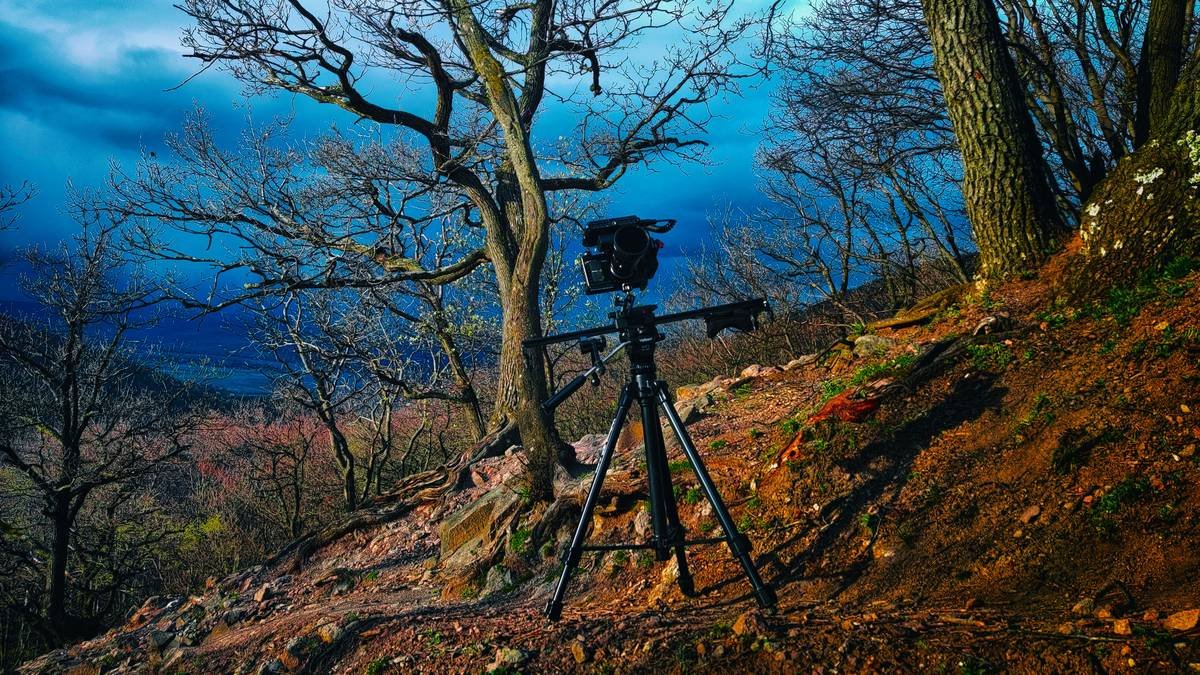
According to a 2023 Outdoor Industry Association report, 68% of multi-day hikers now carry dedicated outdoor cameras—not phones—for trip documentation. Why? Because reliability matters more than megapixels when you’re 12 miles from the trailhead.
How to Choose the Right Action Camera for Nature Hiking
Don’t just grab whatever’s on sale at REI. Evaluate these non-negotiables:
What waterproof rating do you actually need?
“Water-resistant” ≠ waterproof. For creek crossings or sudden downpours, look for IPX8 certification or manufacturer-rated submersion to **at least 10 meters (33 feet)** without a housing. The GoPro HERO11 Black survives 33ft bare; the DJI Osmo Action 4 hits 59ft—that’s crucial if you’re scrambling near waterfalls or fording rivers.
How does cold weather affect battery life?
Batteries lose up to 40% capacity below 40°F (4°C). On a winter hike in Colorado’s Maroon Bells, my old GoPro died after 45 minutes at 25°F. Now? I carry two spare batteries in a ziplock inside my puffer vest—they stay warm and double runtime.
Is electronic image stabilization (EIS) enough?
Yes—if it’s advanced EIS like GoPro’s HyperSmooth 5.0 or DJI’s RockSteady 3.0. Standard stabilization turns bumpy trails into nausea-inducing slideshows. Pro tip: enable horizon leveling so your mountain vistas don’t tilt like a sinking ship.
7 Pro Tips for Flawless Hiking Footage (Without Looking Like a Tourist)
- Mount on your chest, not your pack. Backpack vibration = unusable footage. A chest harness (like the GoPro Chesty) captures smooth, immersive POV shots.
- Shoot in 4K/30fps minimum. You can always downscale later—but never upscale blurry 1080p.
- Use flat color profiles. GoPro’s “Flat” or DJI’s “D-Cinelike” preserve dynamic range for editing in low-contrast forest light.
- Enable auto-low light. Cameras like the Insta360 Ace Pro automatically adjust shutter speed in dim conditions—no fiddling mid-hike.
- Avoid digital zoom. It crops your sensor and amplifies noise. Get closer or crop in post.
- Clean the lens before every hike. One fingerprint = hazy sunrise shot. Keep a microfiber cloth in your first-aid kit.
- Format your SD card in-camera. Prevents corruption on long trips. Use U3/V30-rated cards (SanDisk Extreme is battle-tested).
🚨 Terrible Tip Alert: “Just use your phone in a waterproof case.” Nope. These cases fog up, muffle audio, and add bulk. Worse—they fail at depths over 3ft. Save your case for beach days, not alpine lakes.
Grumpy Optimist Corner
Optimist You: “Film golden hour from the summit—it’ll go viral!”
Grumpy You: “Ugh, fine… but only if I get to nap first. And someone better spot me on that cornice.”
Real-World Test: How Four Action Cameras Held Up on the Pacific Crest Trail
Last summer, I hiked 120 miles of the PCT from Sonora Pass to Carson Pass with four cameras: GoPro HERO11 Black, DJI Osmo Action 4, Insta360 Ace Pro, and the budget-friendly AKASO Brave 7 LE.
Results:
- GoPro HERO11 Black: Best stabilization and app ecosystem. Survived a 6ft drop onto granite. Battery lasted 1h 20m at 50°F.
- DJI Osmo Action 4: Superior low-light detail and dual screens (great for solo framing). Waterproof to 59ft outperformed others during a surprise thunderstorm.
- Insta360 Ace Pro: Leica-branded lens delivered stunning dynamic range in mixed shade/sun. AI editing features saved hours in post.
- AKASO Brave 7 LE: Affordable ($129), but stabilization wobbled on steep descents. Waterproof housing leaked after Day 3.
Verdict? If you’re investing in one camera for serious hiking, the DJI Osmo Action 4 or Insta360 Ace Pro offer the best blend of durability, image quality, and cold-weather resilience.
FAQs About Action Cameras for Nature Hiking
Can I use an action camera in freezing temperatures?
Yes—but keep spare batteries warm in an inner pocket. Lithium-ion cells underperform below 32°F (0°C). The Insta360 Ace Pro includes a “cold mode” that optimizes power draw.
Do I need extra mounts for hiking?
A chest mount is essential. Avoid helmet mounts—they transmit every head bob. A mini tripod (like Joby GorillaPod) doubles as a trekking pole mount for camp timelapses.
Are action cameras good for wildlife photography?
For video, yes—especially with slow-mo modes. But for stills, they lack optical zoom. Use them for behavioral clips (e.g., deer grazing), not ID shots.
How do I prevent fogging inside the lens?
Wipe the lens before sealing it. In humid climates, toss a silica gel packet into your camera case overnight. Never open the battery door in moist air.
Conclusion
Your hikes deserve more than blurry phone clips or gear that quits halfway up the trail. An action camera for nature hiking isn’t just about capturing views—it’s about preserving the sensory rush of wind through pines, the crunch of snow under boots, the silence before a marmot whistles.
Prioritize true waterproofing, cold-weather battery life, and pro-grade stabilization. Mount it right, shoot smart, and edit minimally. And above all—keep walking. The best shot is always around the next bend.
P.S. Like a Tamagotchi, your action camera needs daily care: format cards, check seals, and charge spares. Neglect it, and it ghosts you mid-summit.
Frost on lens,
Battery blinking red—
Still worth the climb.