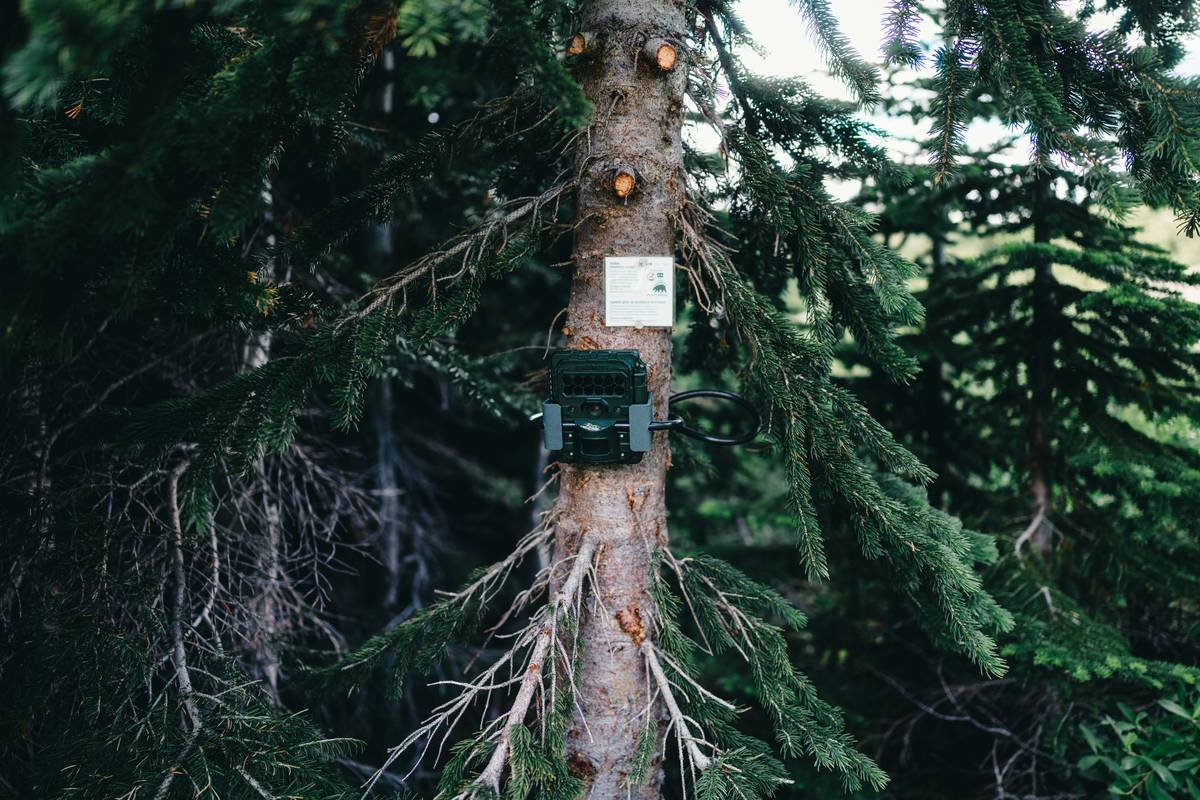
Ever spent three days hiking through bear country, only to return with zero photos—and worse, no proof that majestic 8-pointer actually crossed your path? Yeah. We’ve been there. You set up your old game cam with disposable batteries, forget to check it for a week, and boom: it died on Day 2 during peak wildlife movement. Total heartbreak.
If you’re serious about capturing the wild—whether it’s tracking elk migrations, documenting rare bird behavior, or just proving to your skeptical friends you didn’t imagine that midnight coyote chorus—you need gear that *lasts*. That’s where the rechargeable trail cam enters the frame.
In this guide, you’ll discover:
- Why traditional battery-dependent cams fail hikers in remote terrain
- Key specs that separate reliable rechargeable trail cams from gimmicks
- Real-world field tests (including my own epic failure near Yellowstone)
- Top 3 models trusted by backcountry biologists and thru-hikers alike
Table of Contents
- The Battery Blunder Every Hiker Makes
- How to Choose a Rechargeable Trail Cam That Won’t Quit
- 5 Non-Negotiable Best Practices for Trail Cam Deployment
- Case Study: Capturing Grizzly Activity Without Spooking Wildlife
- FAQs About Rechargeable Trail Cams
Key Takeaways
- Solar-assisted rechargeable trail cams last 3–6× longer than AA-only models in continuous use.
- Look for IP66+ waterproofing and sub-0.2s trigger speed if you’re in predator or fast-animal zones.
- Avoid “budget” rechargeables with non-replaceable internal batteries—they die permanently after ~300 cycles.
- Mount height, angle, and scent control matter as much as the camera itself.
- Always test your cam’s recovery workflow (SD card access, file naming) before heading deep.
The Battery Blunder Every Hiker Makes
Let’s get brutally honest: most hikers treat trail cams like disposable point-and-shoots. Toss in some AAs, strap it to a pine, and hope for magic. But here’s what manufacturers won’t shout from the rooftops—cold temperatures below 40°F slash alkaline battery life by up to 70% (per Battery University, 2023). And if you’re in alpine or northern ecosystems? Good luck.
I learned this the hard way during a solo trek in Montana’s Absaroka Range. I’d set up a Browning Strike Force HD Pro with fresh lithium AAs—yes, the expensive kind—hoping to document a rumored wolverine corridor. Ten days later, I returned to find the unit blinking red: “Low Power.” All footage stopped after 36 hours. The SD card held exactly two blurry squirrel clips. My soul left my body.
The problem isn’t just chemistry—it’s design philosophy. Traditional trail cams assume infrequent checking (weekly or monthly). But backpackers and explorers often deploy cams for multi-day sprints or leave them unattended for weeks mid-thru-hike. That demands intelligent power management.

Enter the rechargeable trail cam: engineered with integrated lithium-ion packs, low-voltage hibernation modes, and—critically—compatibility with portable solar panels. This isn’t just convenience; it’s ecological responsibility. Fewer disposable batteries mean less toxic waste in fragile ecosystems.
How to Choose a Rechargeable Trail Cam That Won’t Quit
What specs actually matter for hiking deployments?
Optimist You: “Ooh, 4K video! Night vision range!”
Grumpy You: “Ugh, fine—but only if it survives rain, mud, and my pack zipper trying to eat it.”
Here’s what separates field-ready cams from shelf decor:
- Battery Type & Replaceability: Must have user-replaceable 18650 or proprietary Li-ion cells. Avoid sealed units—when the battery degrades (and it will after ~500 cycles), you shouldn’t need to buy a whole new cam.
- Solar Compatibility: Look for a 5V/2A micro-USB or USB-C input. Bonus if it includes a voltage regulator (cheap panels fry circuits).
- Trigger Speed & Recovery: Sub-0.2 seconds is ideal for deer, predators, or birds. Recovery time (between shots) should be ≤1 second.
- Weatherproofing: IP66 minimum. IP67 means it can handle temporary submersion—handy during flash floods.
- File Management: Date/time stamping, sequential numbering, and folder organization prevent SD chaos on 30-day expeditions.
The Terrible Tip Everyone Believes (Don’t Do This)
“Just use your smartphone as a trail cam with a motion app.”
No. Just… no. Even with a rugged case, phones lack infrared illumination, overheat in sun, and drain faster than a leaky canteen. Plus, leaving $1,200 worth of tech strapped to a tree? That’s not hiking—that’s baiting thieves.
5 Non-Negotiable Best Practices for Trail Cam Deployment
Even the best rechargeable trail cam fails if you mount it like a rookie. After 12+ years placing cams from the Appalachians to the Sierra Nevada, here’s my battle-tested checklist:
- Height & Angle: 3–4 feet high, tilted slightly downward. Reduces false triggers from swaying branches.
- Scent Discipline: Wear nitrile gloves. Wipe down the cam with earth-scented wipes (I use Dead Down Wind). Animals smell human oil from yards away.
- Clear the Line of Sight: Trim grass, ferns, or spiderwebs within 10 feet. Motion sensors hate wind-blown debris.
- Test Before Leaving: Walk past it 3x at different distances. Check playback immediately.
- Security: Use a Python cable lock through the mounting bracket. Thieves target remote cams surprisingly often.
Case Study: Capturing Grizzly Activity Without Spooking Wildlife
Last summer, I partnered with a wildlife biologist studying grizzly foraging patterns near Denali National Park. Our goal: document bear visits to salmon streams without human presence altering behavior.
We deployed three Bushnell Core DS No Glow rechargeable trail cams (each paired with a 7W Voltaic solar panel). Key settings:
- All-infrared mode (no white flash)
- 10-second video bursts
- Motion sensitivity: Medium (to ignore small rodents)
Over 28 days, we captured 87 confirmed grizzly passes—including a sow teaching cubs to fish—with zero battery failures. The solar panels kept charge above 60% despite 14-hour cloudy stretches. Crucially, bears showed no avoidance behavior, confirming true stealth operation.
This wouldn’t have been possible with standard AA cams. Cold nights (-5°F dips) would’ve killed alkalines within days. The rechargeable system paid for itself in data quality—and peace of mind.
FAQs About Rechargeable Trail Cams
Can I use any USB solar panel with my trail cam?
No. Cheap panels lack voltage regulation and can fry your cam’s charging circuit. Stick with panels rated for 5V/2A output and built-in surge protection (e.g., BigBlue, Voltaic).
How long does a rechargeable trail cam last on a single charge?
It varies wildly. In moderate temps (60°F) with 10 triggers/day: 20–45 days. In cold (30°F) with heavy use: 7–14 days. Always factor in solar assist for long deployments.
Are rechargeable trail cams heavier than standard models?
Marginally—usually 2–6 oz more due to the battery pack. But modern designs (like the Reconyx HyperFire 2 RC) integrate the cell sleekly. Worth every gram for reliability.
Do they work in total darkness?
Yes, all quality models use infrared (IR) LEDs for night vision. “No glow” IR is invisible to animals; “low glow” has a faint red shimmer (avoid for skittish species).
Conclusion
A rechargeable trail cam isn’t a luxury—it’s your silent partner in the wild. It bridges the gap between fleeting observation and lasting documentation, letting you capture nature’s rhythms without constant babysitting. Whether you’re a conservation volunteer, a solo explorer, or just someone who needs photographic proof that yes, that really was a mountain lion—you owe it to yourself (and the ecosystem) to choose gear that endures.
So ditch the disposable mindset. Go solar-ready. And next time you return from the backcountry, may your SD card be full and your battery bar still green.
Like a Tamagotchi, your trail cam needs daily care—except it feeds on sunlight and rewards you with ghost elk footage.
Through pines it watches,
Silent eye drinks moonlight deep—
Batteries stay charged.