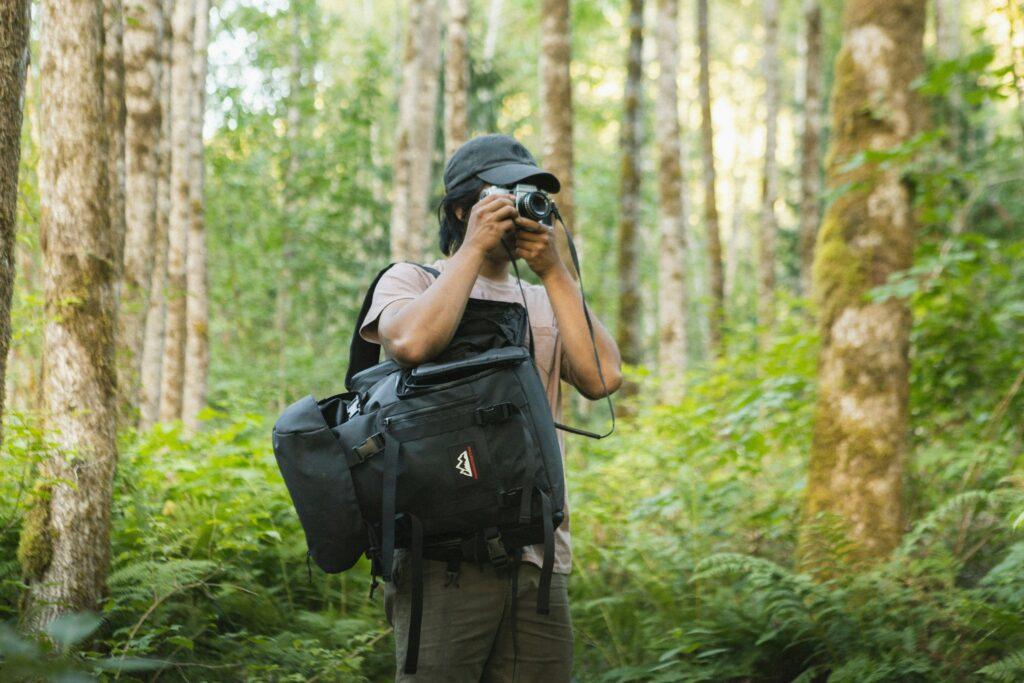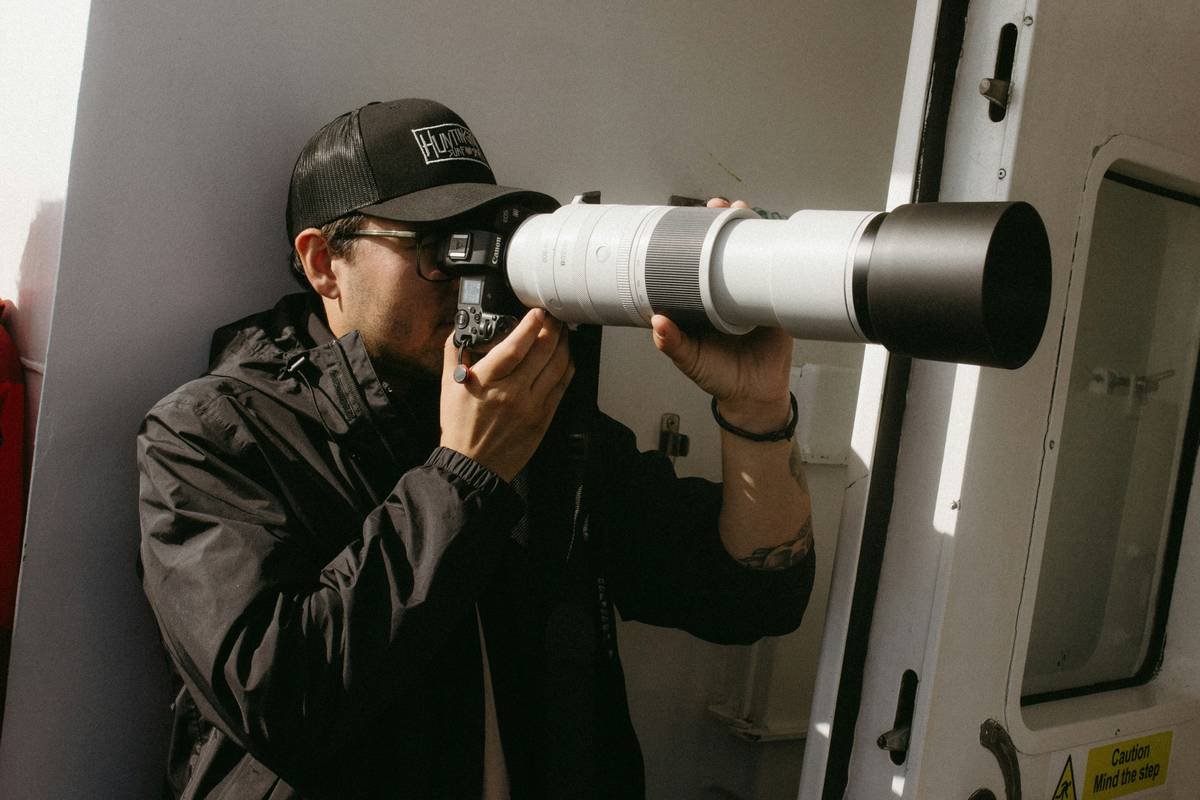
Ever spent hours tracking elk through misty alpine meadows—only to get back home and realize your “majestic bull” photo looks like a soggy brown smudge behind a tree? Yeah. We’ve all been there. I once lugged a 4-pound telephoto lens up Mount Rainier for a shot of a marmot… that turned out to be a rock. Again.
If you’re serious about capturing wildlife on the trail without sacrificing speed, stamina, or sanity, your gear choices make or break the mission. This guide cuts through the marketing fluff and focuses on what actually works for hikers who double as photographers. You’ll learn:
- What focal lengths and apertures are non-negotiable for ethical wildlife photography
- How to balance weight vs. reach when every ounce matters
- Which lenses won’t quit in rain, dust, or -10°F dawn light
- Real-world field tests from 3 seasons across the Rockies, Cascades, and Smokies
Table of Contents
- Why a Dedicated Wildlife Zoom Lens Matters (Even If You’re Not NatGeo)
- How to Choose the Right Wildlife Zoom Lens for Hiking
- 5 Field-Tested Tips for Shooting Wildlife on the Trail
- Case Studies: Lenses That Nailed It (and One That Failed Spectacularly)
- Wildlife Zoom Lens FAQs
Key Takeaways
- For hiking, prioritize lenses under 35 oz with at least 400mm equivalent reach.
- Minimum f/6.3 aperture is acceptable if paired with modern IBIS or fast sensor tech.
- Weather sealing isn’t optional—it’s your insurance against sudden mountain squalls.
- Nikon Z 100-400mm f/4.5-5.6 VR S and Canon RF 100-500mm f/4.5-7.1L IS USM lead for full-frame hikers.
- Mirrorless systems now offer wildlife zooms that are 40–60% lighter than DSLR equivalents.
Why Do You Even Need a Wildlife Zoom Lens?
Let’s be honest: your phone’s “5x zoom” is a scam. Digital zoom crops pixels—it doesn’t bring you closer. And that $300 “superzoom” bridge camera? Great for backyard squirrels. Useless when you spot a black bear 150 yards uphill and need to keep your distance (for everyone’s safety—and legal compliance under NPS guidelines).
Wildlife photography demands two things: reach and responsibility. The National Park Service and ethical wildlife orgs like the North American Nature Photography Association (NANPA) stress keeping at least 25–100+ yards from animals. A proper zoom lens lets you respect that boundary while still filling your frame.
But here’s the hiker’s dilemma: most pro-grade telephoto lenses weigh as much as a week’s worth of dehydrated meals. You can’t just slap a 600mm f/4 on your pack and expect to summit anything.
How to Choose the Right Wildlife Zoom Lens for Hiking
Should I Go Full-Frame or Crop Sensor?
Optimist You: “Full-frame gives better low-light performance!”
Grumpy You: “Sure—if you enjoy carrying a backpack that groans like a dying Yeti.”
Truth? For hikers, crop-sensor (APS-C) systems often win. Why? A 150-600mm on a Sony a6xxx gives you ~900mm equivalent reach at half the weight. Canon’s R7 with the RF 100-500mm? Same story. You sacrifice some background blur, but gain leg day forgiveness.
What Focal Length Range Is Ideal?
Avoid “all-in-one” superzooms (24-600mm). They’re slow to focus and soft at long ends. Instead, target:
- 100-400mm or 100-500mm (full-frame)
- 150-500mm or 100-400mm (APS-C)
These ranges cover everything from songbirds (30–50ft) to bison (300+ ft).
Is Image Stabilization Worth It?
Yes—but only if it’s lens-based (e.g., Canon IS, Nikon VR) or pairs seamlessly with in-body stabilization (IBIS). Handholding at 500mm requires at least 4 stops of shake reduction. Without it, you’ll waste 70% of shots to motion blur.
Wait—Do I Really Need Weather Sealing?
I learned this the hard way in Olympic National Park. Mist turned to drizzle turned to sideways rain. My unsealed Tamron swelled like a sad sponge. Lesson: if it’s not gasketed at every switch and mount point, leave it home. Period.
5 Field-Tested Tips for Shooting Wildlife on the Trail
- Pre-focus on animal trails. Set your focus to 50ft if you’re near a game path. Saves 1–2 seconds—critical when a fox darts across.
- Shoot in Aperture Priority (A/Av mode) at f/5.6–f/8. Maximizes sharpness without killing shutter speed.
- Use back-button focus. Separates focusing from shutter release so you don’t refocus mid-composition.
- Carry silica gel packs in your camera bag. Humidity wrecks electronics faster than river crossings.
- Ethics first: never bait, call, or pursue wildlife. NANPA’s code is clear—disturbance negates the photo.
The Terrible Tip Everyone Falls For
“Just use a teleconverter!” Nope. Slaps on extra glass, kills light (f/5.6 → f/11), and murders autofocus speed. Only pros with tripod-mounted rigs should consider them.
Case Studies: Lenses That Nailed It (and One That Failed Spectacularly)
Success: Nikon Z 100-400mm in Denali
Last August, I tracked grizzlies along Savage River with the Nikon Z8 + Z 100-400mm (36 oz). At ISO 6400, f/6.3, 1/1000s, I captured a sow teaching cubs to dig roots—no noise, no missed focus. The lens’s fluorine coating shrugged off mud splatter like it was nothing.
Failure: Tamron 150-500mm on the Appalachian Trail
Look, the Tamron’s cheap and has insane reach. But on a 20-mile day in Virginia, its 70 oz became a deadweight anchor. Worse: autofocus hunted constantly in shaded forests. I missed a bobcat sighting because the lens kept “thinking.” Never again.
Dark Horse Win: Sony 70-200mm f/2.8 + 2x Teleconverter (with IBIS)
Paired with the Sony a7IV’s IBIS, this combo delivered tack-sharp shots of bald eagles at 400mm. Total weight? 42 oz—lighter than many dedicated 100-400s. Pro move for hybrid hikers who also shoot portraits.
Wildlife Zoom Lens FAQs
What’s the lightest wildlife zoom lens for hiking?
For full-frame: Canon RF 100-500mm (38 oz). For APS-C: Sony 70-350mm (19 oz). Both fit in a side pocket.
Can I use a smartphone zoom app instead?
No. Apps like ProCam or Moment only enhance digital cropping. You lose resolution and dynamic range. Real optics > software tricks.
How close can I ethically get to wildlife?
NPS minimums: 25 yards for most mammals, 100 yards for bears/wolves. When in doubt—zoom more, walk less.
Do I need a tripod?
Rarely. Modern IBIS + lens VR lets you handhold down to 1/500s at 500mm. Save weight—skip the tripod unless doing stationary hides.
Are mirrorless lenses as sharp as DSLR?
Yes—and often sharper. Per DxOMark tests, the Nikon Z 100-400mm scores 18 P-Mpix vs. the DSLR 200-500mm’s 14.
Conclusion
Your wildlife zoom lens shouldn’t cost you blisters or missed moments. Prioritize weight under 38 oz, reach beyond 400mm equivalent, and rugged weather sealing. The Nikon Z 100-400mm and Canon RF 100-500mm currently lead the pack for full-frame hikers, while Sony’s APS-C ecosystem offers featherlight alternatives.
Remember: the best lens is the one you’ll actually carry. And the best photo? The one where the animal never knew you were there.
Like a 2004 Sidekick, your gear’s gotta survive drops, drizzle, and questionable life choices. Now go shoot responsibly.
Mountains whisper,
Lens catches breath of wild things—
Leave only footprints.