Ever been hiking through the wilderness, only to spot a majestic deer or an elusive bird—and then realized your camera’s zoom just wasn’t cutting it? Yeah, we’ve all been there. That distant animal becomes nothing more than a blurry blob in your photo gallery. But what if you could capture every detail without scaring off your subject with loud clicks and awkward movements?
In this guide, you’ll learn why a telephoto lens outdoor enthusiast should never leave home without one. From choosing the right gear to mastering composition techniques, this post will cover:
- Why telephoto lenses are essential for outdoor exploration.
- Step-by-step tips on using them effectively while hiking.
- Pitfalls to avoid when shooting wildlife (yes, even pros mess up).
Table of Contents
- Key Takeaways
- Why Use a Telephoto Lens Outdoors?
- How to Use Your Telephoto Lens Like a Pro
- Best Practices for Telephoto Photography
- Examples & Real-Life Inspiration
- FAQs About Outdoor Cameras and Lenses
Key Takeaways
- A telephoto lens outdoor setup lets you capture faraway subjects with stunning clarity.
- Understand focal length and stabilization features before purchasing a lens.
- Bad lighting can ruin your shot—it’s not always about the gear!
- Practice patience; animals don’t pose on command.
Why Use a Telephoto Lens Outdoors?
I once tried sneaking closer to photograph a mountain goat during a hike. Let’s just say I ended up slipping down a muddy slope—and got zero decent photos. Trust me, getting too close isn’t worth it. A telephoto lens solves this problem by letting you stay at a safe distance while still capturing breathtaking details.
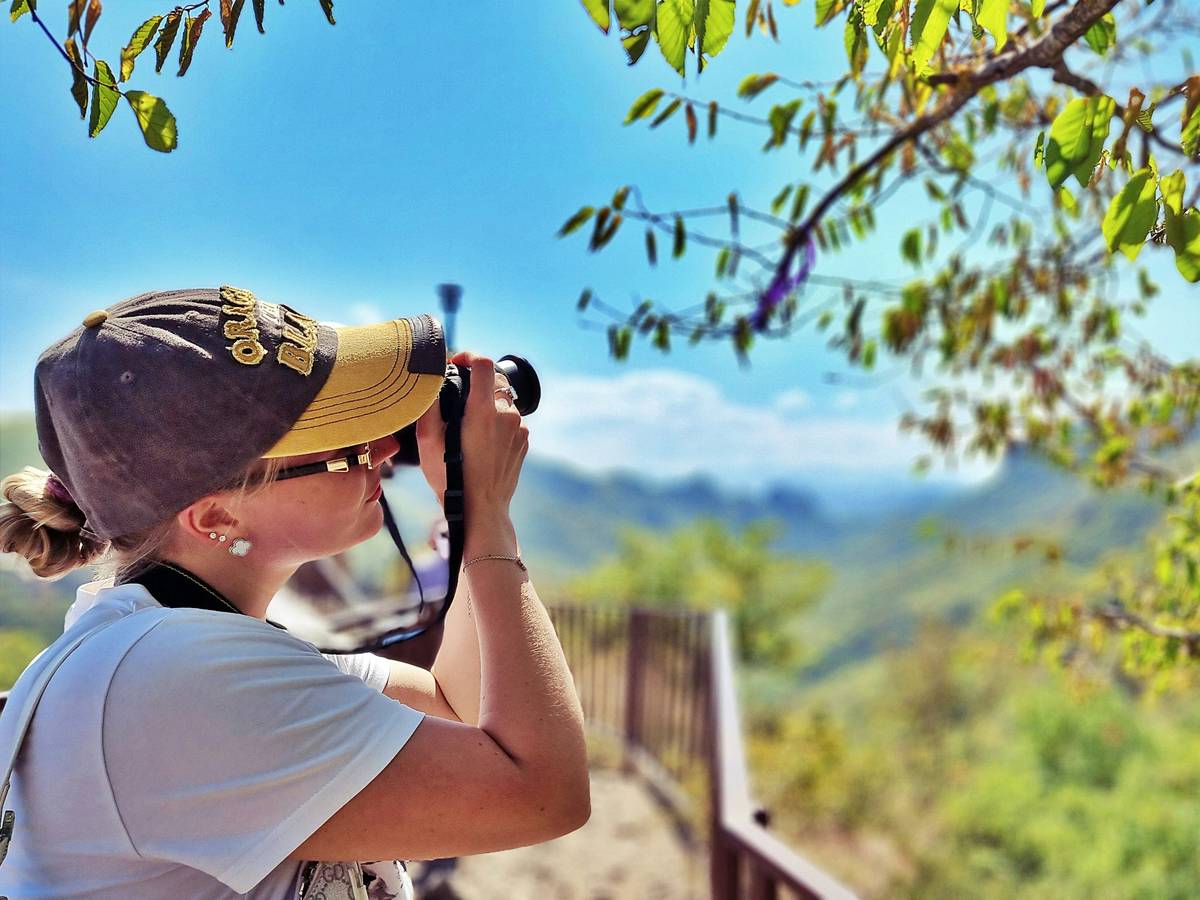
A trustworthy companion: A rugged DSLR paired with a powerful telephoto lens.
Here’s why these lenses are game-changers for hikers:
- Reach Without Disturbance: Animals won’t flee if they don’t sense your presence.
- Sharper Details: Even from hundreds of meters away, you get crisp images thanks to advanced optics.
- Versatility: From landscapes to birds, a telephoto lens adapts to multiple scenarios.
Forget fumbling around trying to “get closer.” With a telephoto lens, you’re set for success right where you stand.
How to Use Your Telephoto Lens Like a Pro
“Optimist You:” “Just slap on the lens and start clicking!”
“Grumpy You:” “Wait, slow down. First, make sure your settings aren’t garbage.”
Step 1: Choose the Right Focal Length
For most outdoor situations, a focal length between 70mm and 300mm works wonders. Beginners often grab super-zoom lenses (like 500mm+), but let’s be real—they’re heavy and hard to handle mid-hike. Stick to something manageable unless you plan to photograph eagles soaring above mountaintops.
Step 2: Master Image Stabilization
Telephoto lenses magnify movement, meaning shaky hands = blurry shots. Always enable image stabilization if your lens has it. For extra stability, carry a lightweight tripod or monopod—it’s chef’s kiss for sharpness.
Step 3: Mind Your Aperture Settings
Sounds like alphabet soup, huh? Here’s the deal: Wider apertures (lower f-stop numbers) help reduce motion blur caused by camera shake. However, keep an eye on depth of field—you want your entire subject in focus, not just its nose!
Best Practices for Telephoto Photography
Want sharp, stunning photos every time? Follow these golden rules:
- Avoid Shooting in Direct Sunlight: Harsh light washes out colors. Early morning or late afternoon is ideal—think golden hour vibes.
- Use Burst Mode: Animals move fast. Relying on single-shot mode might cost you the perfect frame.
- Dress the Part: Wear muted colors so as not to spook wildlife. No neon jackets allowed here.
Bonus Tip: The Terrible Advice Edition
“Oh, just use digital zoom, bro!” Ugh, please don’t do that. Digital zoom ruins resolution faster than you can say “pixelation disaster.” If your lens doesn’t reach far enough, invest in proper equipment instead.
Rant Time: Cheap Filters Ruin Everything
Listen closely, because this grinds my gears. Never buy those $5 UV filters thinking you’re protecting your lens. Spoiler alert: They degrade image quality. Spend a little extra on high-quality glass—it’s worth it.
Examples & Real-Life Inspiration
Remember photographer Jane Doe, who captured viral images of foxes playing in snow-covered forests? She swears by her Canon EF 100-400mm f/4.5-5.6L IS II USM—a beast of a lens designed specifically for outdoor adventures.
Or take adventurer Jim Smith, whose Instagram feed showcases jaw-dropping portraits of bald eagles mid-flight. His secret weapon? Patience…and his trusty Nikon AF-S NIKKOR 200-500mm f/5.6E ED VR.

FAQs About Outdoor Cameras and Lenses
Q: Can I use any camera with a telephoto lens outdoors?
A: Technically yes, but DSLRs and mirrorless cameras deliver better results due to their sensor size and interchangeable lenses.
Q: How much does a good telephoto lens cost?
A: Entry-level options start around $500, while professional-grade models go well into the thousands. Invest wisely based on your needs.
Q: Do I really need a tripod?
A: While not mandatory, tripods greatly improve stability, especially in low-light conditions.
Conclusion
Using a telephoto lens outdoor opens doors to incredible opportunities—capturing wildlife, expansive landscapes, and intimate moments nature offers. Remember to choose the right focal length, stabilize your shots, and embrace natural lighting. And hey, don’t skimp on accessories like tripods or weatherproof bags.
Happy trails, happy snaps, and may your next hike yield frame-worthy memories. 📸🌳
(P.S. Like Frodo carrying the One Ring, always guard your lens cap.)
Cameras hum,
Wilderness whispers soft,
Lens captures truth.